No products in the cart.

Description
Kids Clothing Pallets – Wholesale Children’s Clothing for Resale
Buy Kids Clothing Pallets in Bulk for Your Business
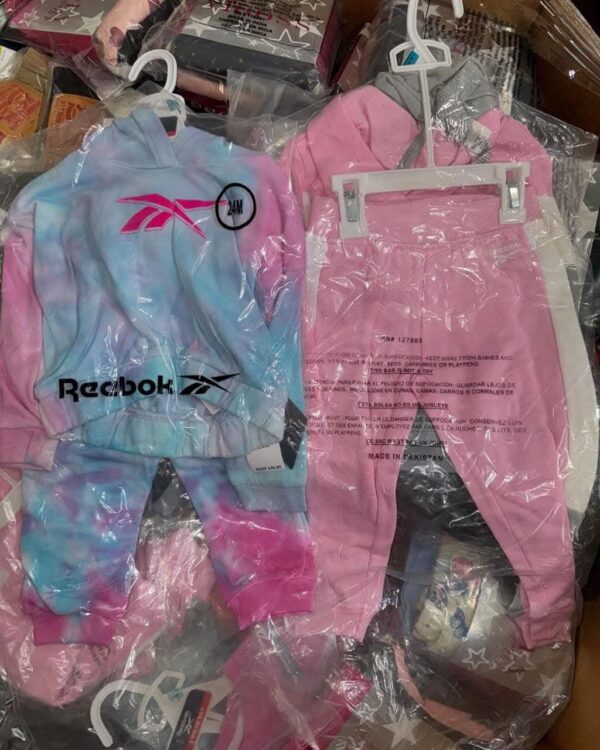
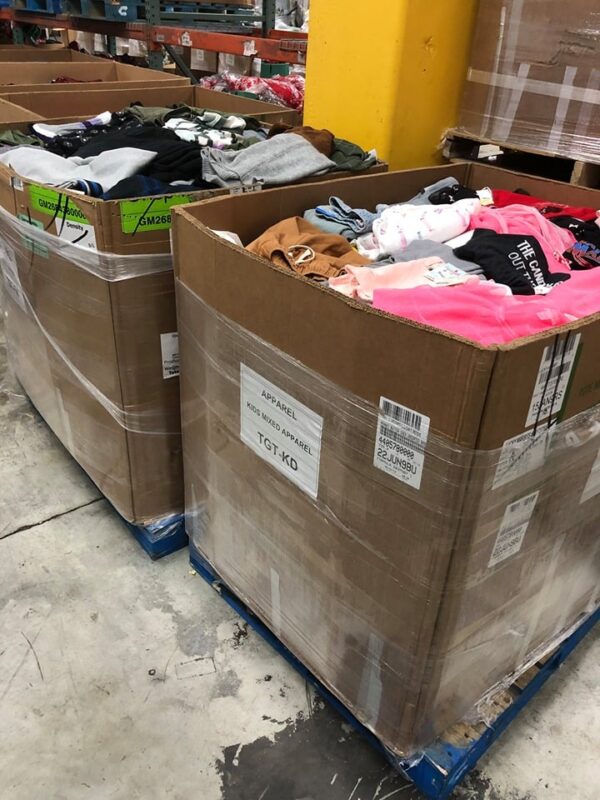
Looking for affordable wholesale children’s apparel to expand your inventory and increase your resale opportunities? Our Kids Clothing Pallets offer a convenient way to source bulk quantities of boys’ and girls’ clothing at once. Each pallet contains approximately 800–1,000 pieces of children’s apparel, providing retailers, online sellers, discount stores, and resellers with a substantial inventory to sort, organize, price, and sell.
These wholesale kids’ clothing pallets contain a mix of overstock merchandise, shelf-pulls, and store returns classified as new. The assortment includes clothing in sizes 2T through 16, making it suitable for businesses serving toddlers, younger children, and school-age shoppers. Pallets feature a mix of premium national and international brands, offering potential variety for retailers who want to provide customers with different styles and brand options.
Whether you operate a physical clothing store, an online boutique, a discount retail business, or a resale operation, buying children’s clothing in bulk can help simplify inventory sourcing. Instead of purchasing individual garments from multiple suppliers, you can acquire hundreds of pieces in a single wholesale lot.
Explore our Kids Clothing Pallets to discover a practical bulk-sourcing option for your business.
Kids Clothing Pallets – Product Specifications
Before purchasing, review the essential details of our wholesale children’s apparel pallets.
- Product: Kids Clothing Pallets
- Inventory condition: Overstock, shelf-pulls, and store returns classified as new
- Total units: Approximately 800–1,000 pieces per pallet
- Clothing sizes: 2T to 16
- Gender assortment: Boys’ and girls’ clothing
- Brands: A mix of premium national and international brands
- Pallet weight: Approximately 500–700 lbs
- Sales format: Wholesale bulk pallet
Actual quantities, size distributions, styles, brands, and garment types may vary between pallets. Buyers should confirm the available inventory details before placing an order.
What Are Kids Clothing Liquidation Pallets?
Kids clothing liquidation pallets are bulk lots of children’s apparel assembled from inventory sources such as retailer overstock, shelf-pulls, and store returns. These lots allow businesses to purchase larger quantities of clothing in one transaction rather than sourcing each item separately.
Overstock merchandise generally refers to products that retailers have more of than they currently need. Shelf-pulls are items removed from retail displays or store shelves, often because of seasonal changes, merchandising updates, or inventory adjustments. Store returns are items returned by customers or retailers and included in the available inventory.
Although the supplied inventory is classified as new, the original packaging, tags, and presentation can differ. Buyers should also confirm how store returns are inspected and whether any exceptions apply to the stated condition.
For resellers, this sourcing model offers access to a varied assortment of children’s apparel in one shipment. It can be especially useful for businesses that sell clothing across several age groups and need enough inventory to support regular customer demand.
What’s Included in Our Wholesale Kids Clothing Pallets?
Each pallet contains approximately 800–1,000 individual pieces of children’s clothing. The assortment includes boys’ and girls’ apparel in sizes 2T through 16.
The exact selection depends on the available inventory, so every pallet may have a different combination of sizes, styles, brands, and garment types.
Children’s Clothing for Different Age Groups
The size range provides opportunities to serve customers shopping for toddlers and older children. Retailers can sort garments by size, age group, clothing category, and selling price to make inventory easier to manage.
Boys’ and Girls’ Apparel
Mixed boys’ and girls’ clothing can help retailers offer a broader selection without purchasing separate large lots for every customer category. The specific ratio of boys’ to girls’ items can vary.
Premium National and International Brands
These pallets contain a mix of premium national and international brands. Brand availability varies by lot, and specific labels should not be assumed unless they are confirmed in the product manifest or inventory details.
Overstock, Shelf-Pulls, and Store Returns
The inventory may include overstock products, shelf-pulls, and store-return merchandise classified as new. Packaging and retail presentation may vary depending on the source and handling history.
Why Buy Kids Clothing Pallets Wholesale?
1. Source Hundreds of Clothing Pieces at Once
Purchasing 800–1,000 pieces in a single pallet can help reduce the time spent finding individual products from multiple suppliers. This bulk format is suitable for businesses that need substantial quantities of clothing for ongoing sales.
2. Expand Your Product Selection
A mixed assortment of boys’ and girls’ apparel gives sellers the opportunity to serve different customer groups. The size range from 2T to 16 also provides flexibility when building a children’s clothing section.
3. Explore Potential Resale Margins
Wholesale purchasing can create opportunities to earn a profit when the total cost of the pallet, freight, handling, sorting, and other expenses is lower than the revenue generated from selling the merchandise.
However, profitability is not guaranteed. Actual results depend on the purchase price, sellable quantity, demand, brand mix, pricing strategy, and operating costs.
4. Support Seasonal Inventory Planning
Children’s clothing retailers frequently adjust their product selection to meet seasonal shopping needs. Wholesale pallets may help businesses replenish their stock, prepare for school-shopping periods, or expand their clothing selection when suitable inventory is available.
Because the assortment varies, buyers should confirm that the available garments match their intended season and customer preferences.
5. Serve Multiple Sales Channels
Kids clothing pallets can be suitable for a range of resale channels, including independent retail shops, online clothing stores, discount outlets, local markets, and other resale businesses.
The best sales channel depends on your customer base, local demand, pricing, and ability to process bulk inventory efficiently.
Who Should Buy Wholesale Kids Clothing Pallets?
These pallets can serve several types of businesses.
Clothing boutiques: Independent retailers can use bulk children’s apparel to expand their existing product range or introduce a dedicated kids’ clothing section.
Online resellers: E-commerce sellers can sort the inventory, photograph individual garments or bundles, and list suitable items through their preferred sales channels.
Discount stores: Businesses focused on affordable clothing can evaluate the assortment for products that fit their pricing strategy and target audience.
Market vendors: Sellers at local markets and community sales can separate merchandise by size and category to make shopping easier for customers.
Bulk clothing resellers: Businesses that redistribute apparel can inspect the assortment and determine whether selected garments are suitable for smaller wholesale lots.
New retail entrepreneurs: Buyers establishing a children’s clothing business may find pallet purchasing a way to acquire a large quantity of inventory in one transaction. New buyers should first assess their storage space, working capital, shipping costs, and expected demand.
How to Make the Most of a Kids Clothing Pallet
Buying wholesale inventory is only the first step. Organizing and pricing the merchandise carefully can help you manage stock and improve the customer shopping experience.
Step 1: Organize the Inventory
After delivery, separate the garments into practical categories such as boys’ clothing, girls’ clothing, size groups, and clothing types. Record the quantities in each category so you understand what your pallet contains.
Step 2: Inspect the Merchandise
Even when inventory is classified as new, inspect the garments for stains, missing tags, packaging issues, or other discrepancies. Separate any items that do not meet your business’s resale standards.
Step 3: Calculate Your Total Inventory Cost
Include the pallet purchase price, freight, unloading, storage, sorting, packaging, platform fees, and any other relevant costs. Dividing your total landed cost by the number of sellable pieces provides a useful starting point for pricing.
For example, if your total inventory cost is $1,000 and you have 800 sellable garments, your average cost is $1.25 per sellable piece. This is an illustrative calculation, not a quoted pallet price or a profit guarantee.
Step 4: Set Prices According to Demand
Consider garment type, brand, size, condition, comparable retail prices, and your local market. You may choose to sell individual pieces, create clothing bundles, or offer selected items in discounted lots.
Step 5: Choose the Right Sales Channels
Use channels that match your business model. Individual listings may work for certain branded garments, while bundles or in-store displays may be more efficient for other products.
Track sales and customer demand to identify which sizes and clothing categories perform best.
What to Consider Before Buying Kids Clothing Pallets
Wholesale pallets can provide a substantial amount of inventory, but buyers should understand the practical considerations before committing to a purchase.
Variable assortment: The precise mix of sizes, brands, styles, and garment categories may differ from one pallet to another.
Condition verification: Overstock, shelf-pulls, and store returns can have different handling histories. Confirm the supplier’s condition standards and applicable inspection or return policies.
Storage requirements: A pallet weighing approximately 500–700 lbs requires appropriate storage and a plan for unloading and handling the shipment.
Shipping expenses: Freight costs can significantly affect your total investment. Request a delivery estimate based on your location and the shipment’s dimensions and weight.
Demand and turnover: Not every size or style will sell at the same rate. Research your target market before purchasing large quantities of inventory.
Brand verification: If particular brands are essential to your buying decision, request confirmation of the available brands rather than relying on the general description of a mixed-brand pallet.
Making these checks before ordering can help you select inventory that better fits your budget, storage capacity, and resale goals.
How to Order Kids Clothing Pallets
Ordering wholesale children’s clothing is straightforward when you confirm the important details in advance.
- Review the product specifications: Check the estimated piece count, size range, inventory condition, brand assortment, and pallet weight.
- Confirm current availability: Ask the supplier about the inventory currently available and whether a manifest or additional product details can be provided.
- Request a shipping quote: Confirm the freight cost, delivery arrangements, and any additional handling charges.
- Review the total order cost: Calculate the complete cost of the purchase, including shipping and any applicable fees.
- Submit your order: Follow the supplier’s checkout or ordering process and review the payment, delivery, and applicable return terms before completing the transaction.
If you are purchasing multiple pallets, ask whether combined shipping or volume pricing is available.
Find Kids Clothing Pallets for Your Wholesale Business
Our Kids Clothing Pallets provide an option for businesses seeking bulk children’s apparel from overstock, shelf-pulls, and store returns classified as new. With approximately 800–1,000 pieces per pallet, sizes 2T through 16, boys’ and girls’ clothing, and a mix of premium national and international brands, these lots offer a substantial assortment for businesses to evaluate for resale.
Whether you operate an online store, a boutique, a discount outlet, or a wholesale resale business, reviewing the available assortment and calculating your total landed cost can help you make a more informed purchasing decision.
Check current availability, confirm the inventory details, and request a shipping estimate before ordering your next Kids Clothing Pallet.
Frequently Asked Questions About Kids Clothing Pallets
1. How Many Pieces Come in a Kids Clothing Pallet?
Each Kids Clothing Pallet contains approximately 800–1,000 pieces of children’s clothing. The final quantity can vary according to the particular lot and the available inventory. Buyers should confirm the estimated piece count before placing an order, especially when planning a retail launch or calculating expected inventory costs. It is also helpful to ask whether the supplier can provide an inventory manifest or a more detailed breakdown of the available garments.
2. What Sizes Are Available in Kids Clothing Pallets?
These pallets cover children’s clothing sizes 2T through 16, providing options for toddlers and older children. The exact distribution of sizes varies between pallets, so buyers should not assume that every size will be represented equally. If your business focuses on a particular age group, ask about the available size mix before purchasing. Reviewing the size distribution can help you determine whether the inventory suits your existing customers and expected sales demand.
3. Are Kids Clothing Pallets Brand New?
The inventory is described as overstock, shelf-pulls, and store returns classified as new. However, packaging, tags, and retail presentation can vary depending on the merchandise source and handling history. Buyers should confirm the supplier’s precise condition standards and whether any exceptions apply to store-return items. If new condition is essential to your business, request written clarification before ordering and establish an inspection procedure when the shipment arrives.
4. What Brands Are Included in Kids Clothing Pallets?
The pallets contain a mix of premium national and international brands. The specific brands depend on the available inventory, and a particular label or brand ratio is not guaranteed unless confirmed by the supplier. Businesses targeting customers who prefer specific brands should request the current assortment details before making a purchase. This helps buyers evaluate whether the available merchandise matches their target market, preferred price points, and resale strategy.
5. Are These Pallets Suitable for Clothing Resellers?
Yes, they may suit clothing boutiques, online sellers, discount retailers, market vendors, and businesses that resell bulk apparel. The approximate quantity of 800–1,000 pieces provides a substantial inventory to sort and merchandise. However, suitability depends on the actual assortment, the buyer’s sales channels, and the cost of purchasing and transporting the pallet. Review the inventory details and calculate your expected expenses before deciding whether the lot is right for your business.
6. How Much Does a Kids Clothing Pallet Weigh?
Each pallet weighs approximately 500–700 lbs. Actual weight may vary depending on the clothing assortment, packaging, pallet materials, and shipment preparation. This information is important when arranging freight transportation, unloading equipment, and warehouse storage. Before ordering, confirm the final shipping weight and dimensions with the supplier and request a delivery quote for your location. Proper planning can help avoid unexpected transportation expenses or difficulties receiving a heavy shipment.
7. Can I Choose the Clothing Styles and Sizes?
The available assortment depends on the inventory in each lot. Unless the supplier specifically offers customization, buyers should expect a mixed selection rather than a pallet containing only selected styles or sizes. If your business needs particular garment types, sizes, or brands, ask whether those preferences can be accommodated before purchasing. Confirming the assortment in advance helps set realistic expectations and reduces the risk of ordering inventory that does not fit your business requirements.
8. Can I Make a Profit Reselling Kids Clothing Pallets?
Reselling wholesale children’s clothing can offer profit opportunities, but returns are not guaranteed. Your results depend on the purchase price, freight, the number of sellable garments, pricing, sales fees, customer demand, and how quickly the inventory sells. Calculate your total landed cost and estimate realistic selling prices before ordering. You should also account for storage, labor, unsold inventory, and other expenses to determine whether a pallet is financially suitable for your business.
9. Are Kids Clothing Pallets Suitable for Online Stores?
Yes, these pallets may be suitable for online clothing businesses. Sellers can sort garments by size, brand, style, and category, then list individual pieces or create bundles where appropriate. Before listing products, inspect the merchandise, photograph the actual items, and provide accurate descriptions of sizes and condition. Consider marketplace fees, packaging, shipping, and returns when setting prices. Choosing the right products and sales approach can help make bulk inventory easier to manage online.
10. How Can I Order Kids Clothing Pallets Wholesale?
To order, review the product specifications, confirm current availability, and request details about the assortment and inventory condition. Ask the supplier for a shipping estimate based on the pallet’s weight and your delivery location. Calculate the full order cost, then review payment, delivery, and return terms before completing the purchase. If you plan to buy multiple pallets, ask whether volume pricing or combined freight options are available. Confirming these details in advance helps you make a more informed wholesale purchasing decision.